Caminha
(41,157 STEPS – 31.61 KMS – 19.63 MILES)
The Coastline
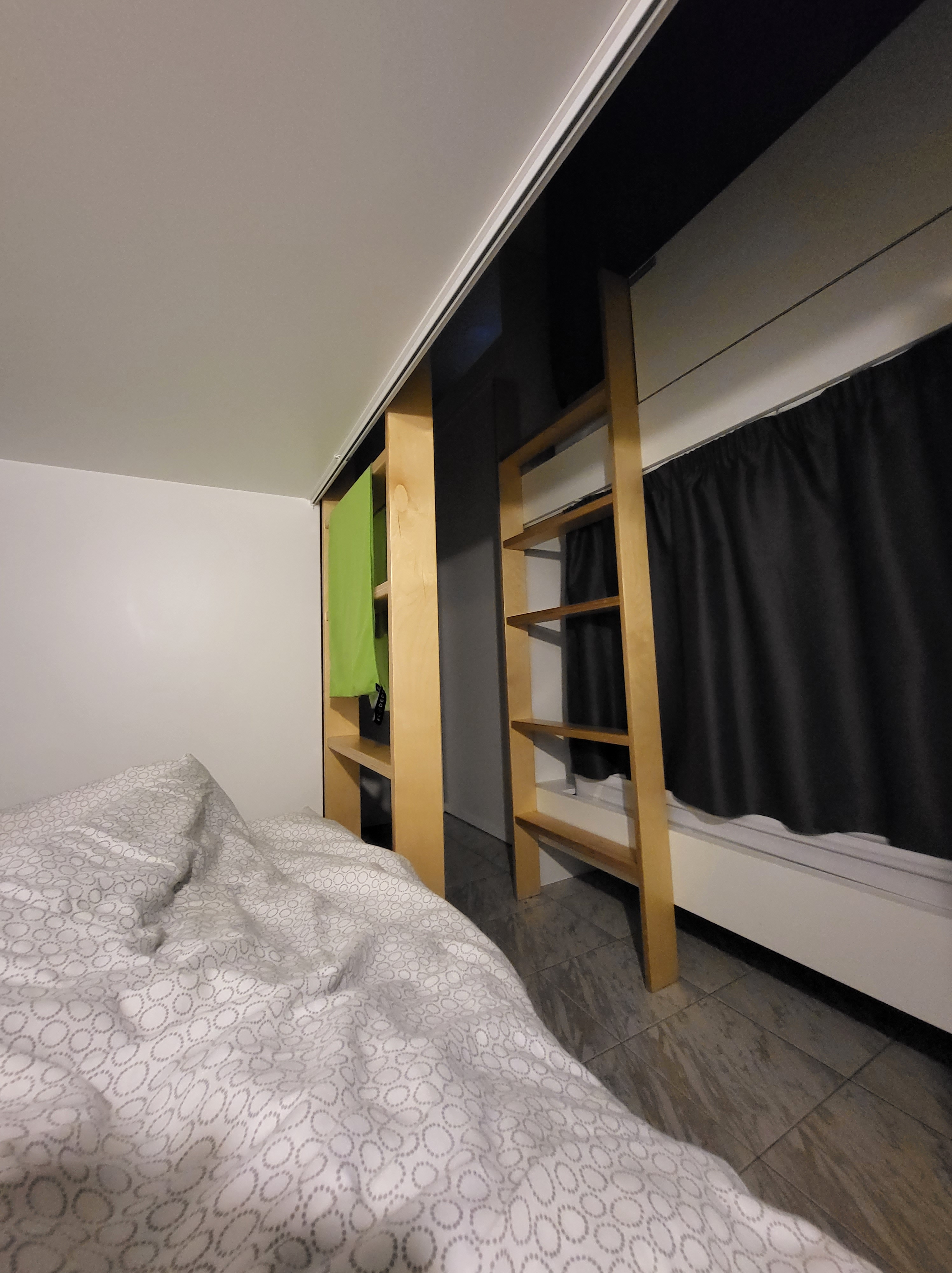
Snoring in an albergue is a given. There are different styles – pitch, volume, duration, snore on the inhale, snore of the exhale, snore on both. Most of the time the snorers disrupt my sleep for an hour or so, then I drift off in exhaustion. Twice I have been kept awake the entire night by legendary snoring. Once in a compact room in Atapuerca on the French Route, and last night.
I was pretty optimistic about the night:
- My bed was a real twin bed with no bunk above me.
- It was in a room with 3 other beds – 1 vacant, the other 2 occupied by a young Spanish guy and a young German guy. Young people rarely snore.
- It was a cool night and we had the window in our room open. I had blankets piled on my bed, I would be as snug as a bug in a rug.
- I was tired. It had been a long day, nearly 18 miles of walking with lots of elevation gain and descents.
We turned in at 10:00 pm. At 10:15 pm, the young Spaniard starting snoring. No worries, I have methods to mitigate the effects. Plug in the headphones, open the Audible app, and play “The Alchemist,” read by Jeremy Irons on a 30-minute timer. 30 minutes passed and the Spaniard had overpowered Jeremy. Mitigation Phase II – put on a good music playlist and crank up the volume. The Spaniard prevailed. It was the loudest snoring I’ve ever heard, so much so that I lay awake worrying about his health. And it went on all night.
The young German left the room about midnight. He went to the living room at the front of the house. He reported that it was quiet but cold, all he had was a threadbare blanket (I think all the good ones were on my bed). He was exhausted because of the poor sleep. The ladies in the room next to ours passed by on the way out, they too had suffered through the closed doors and a wall separating the room. Same with the lady in the private room two doors down. It was a rough night for all of us in the albergue except for the slumbering giant.
I have known people that won’t sleep in one of these dorms because of it – either it will disturb their sleep, or they are self-aware snorers and don’t want to torture everyone else. I try to take it as it comes because I like the experience of staying in the albergues, but if I go 2 or 3 days without good sleep, I’ll book a private room. Then if I’m kept awake by snoring, there’s no one to blame but me…but I don’t snore.
As I stirred about the common area, the German asked if I was leaving for good. When I said yes, he rushed back to the room to gather blankets from my bed so he could go back to sleep on the couch. The young Spaniard snored away in the back room as I walked out the front door.
After a night like that, early coffee is non-negotiable. I would search the streets of Viana do Castelo if I had to. Luckily, I didn’t have to. On the way out along the coastline, there was a pasteleria with fresh coffee and fresh pastries. Two café americanos, a croissant, and a napolitana de chocolate. Proper.
When I finished, I paid the 3€ tab and asked if they had coffee to go. This is not common on the Iberian Peninsula, the customer is expected to take the time to sit and enjoy the nectar of life. In broken Portu-Spanglish, I told her of my night’s sleep. Feeling sorry for me, she searched behind the bar, found a disposable cup, and made a fresh americano for me, no charge. Win.
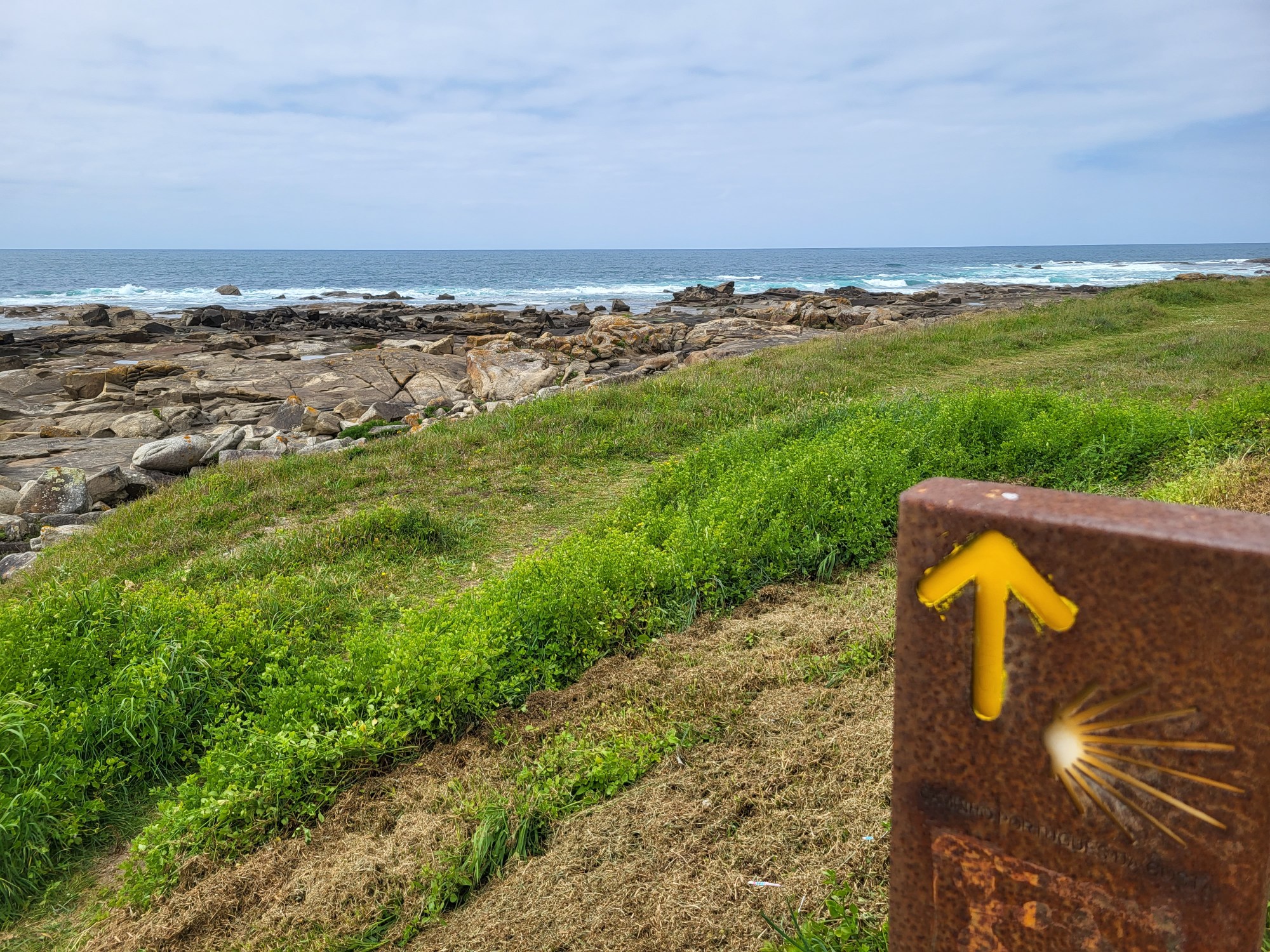
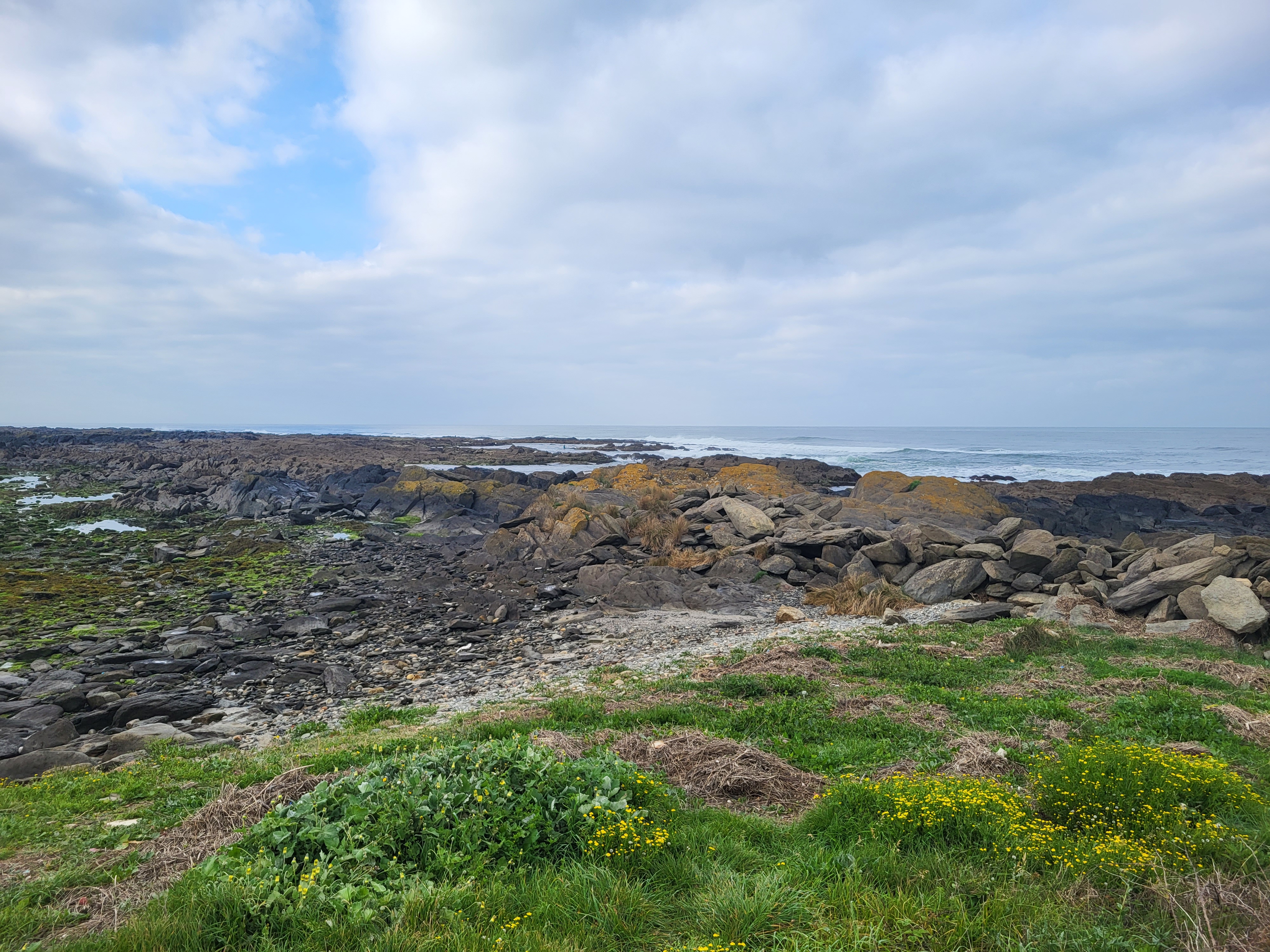
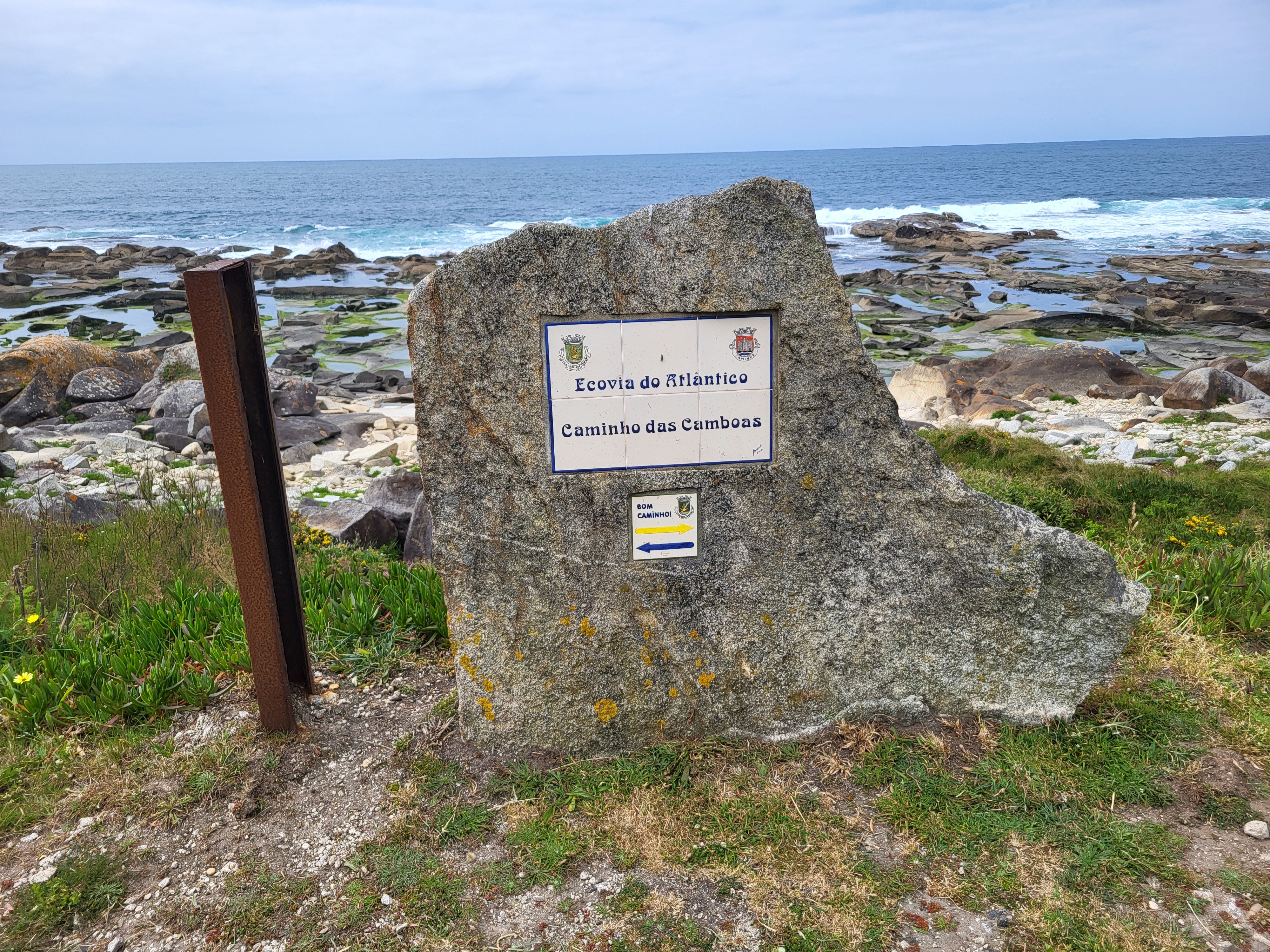
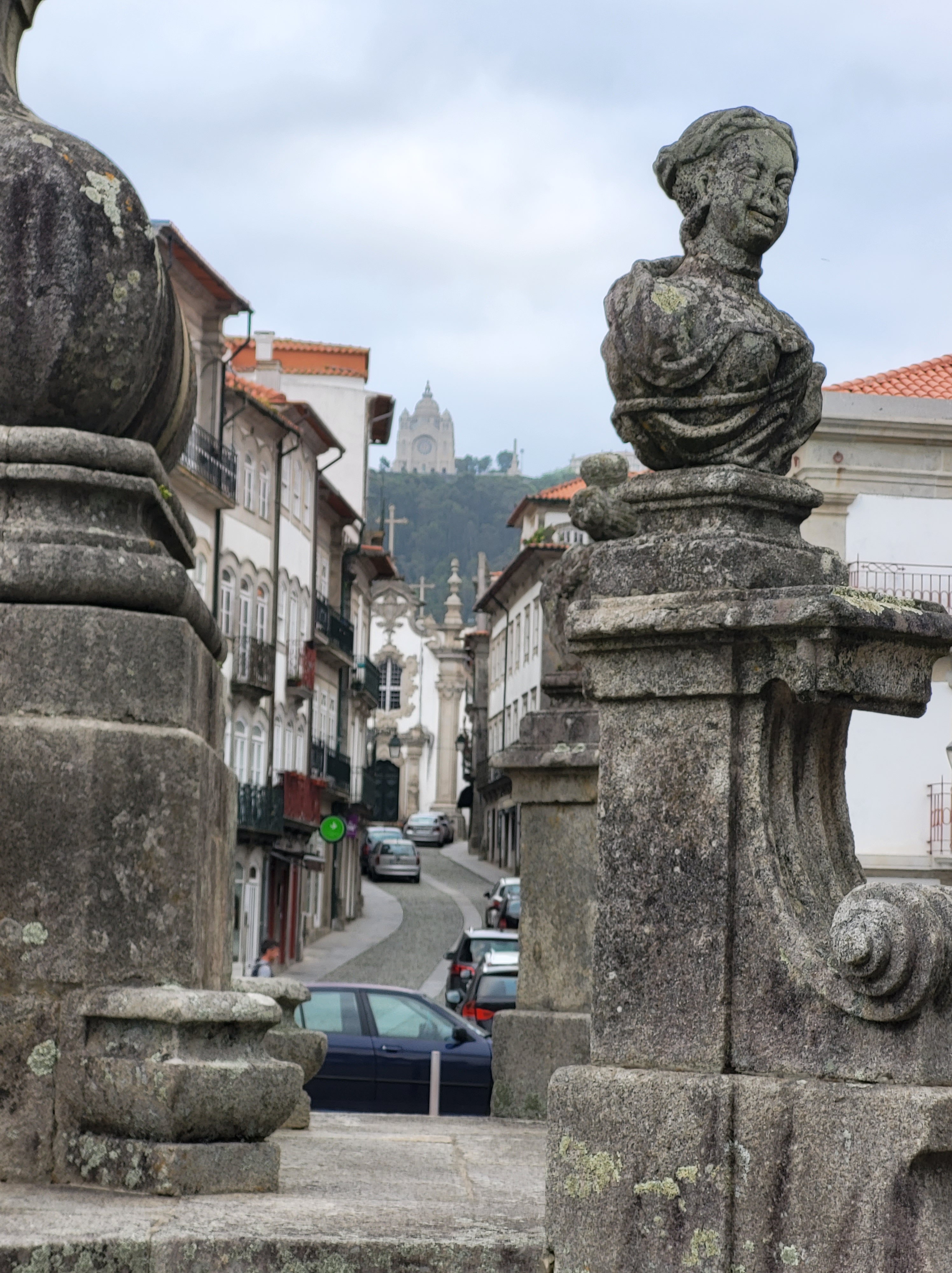
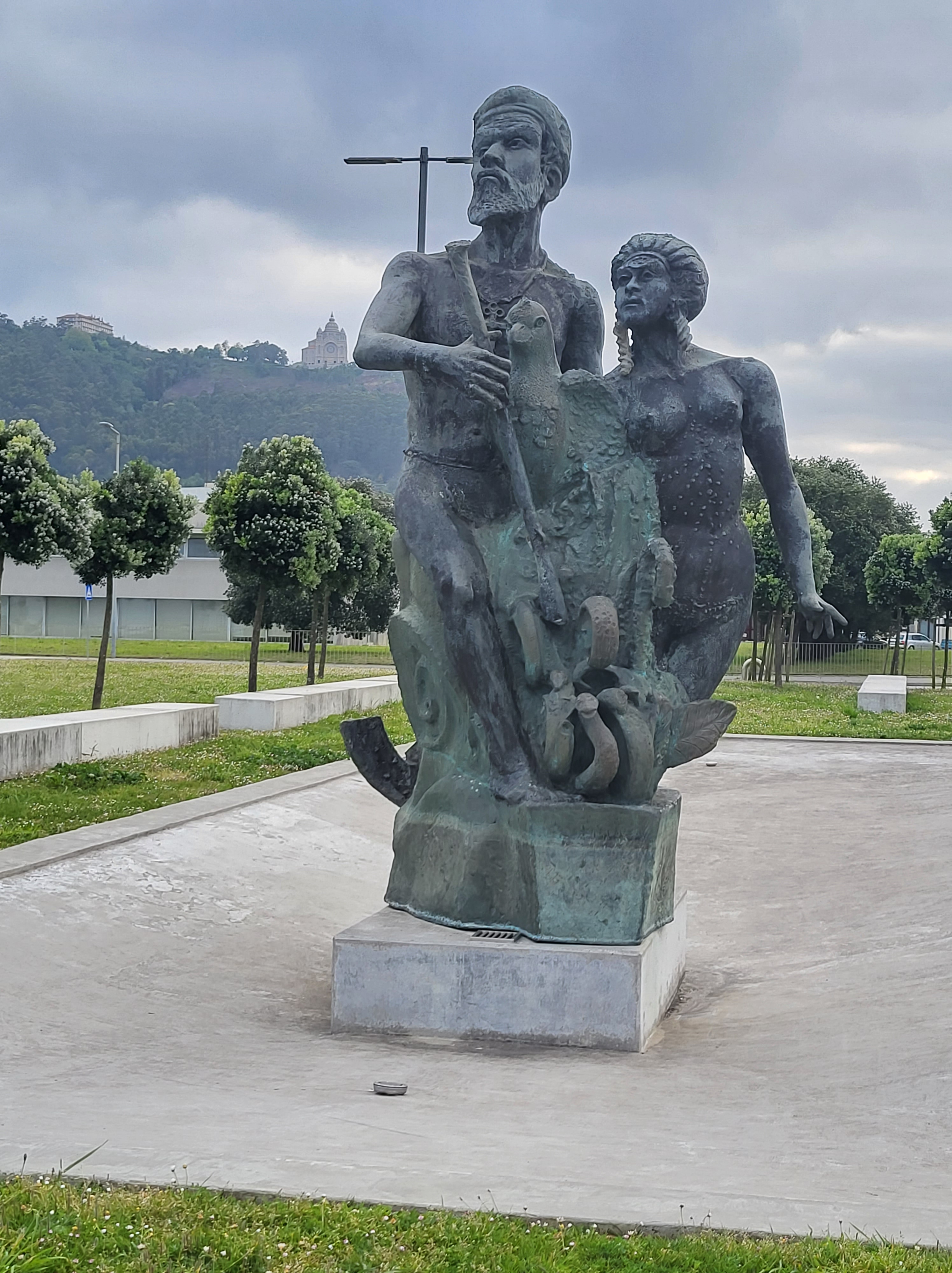
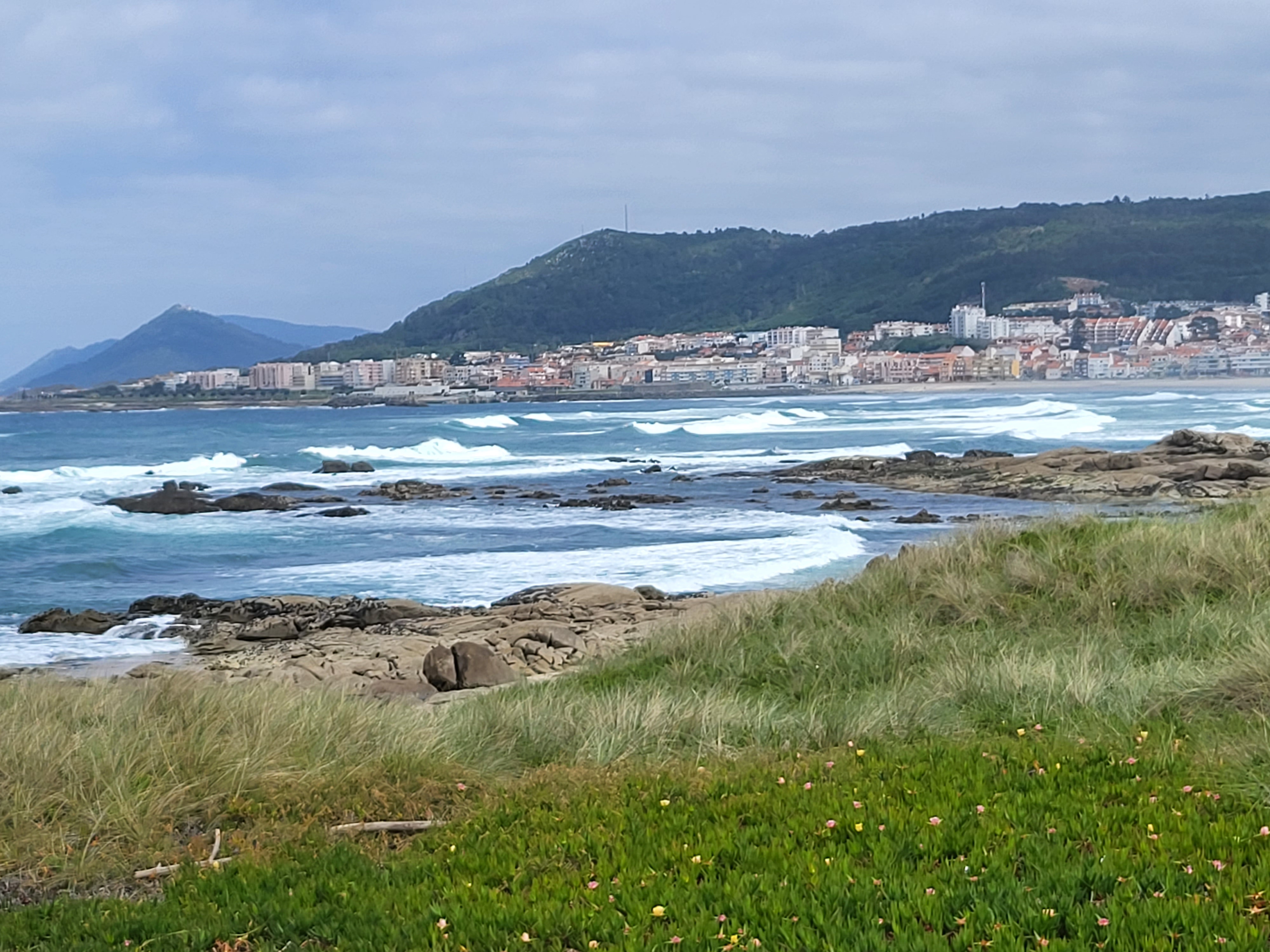
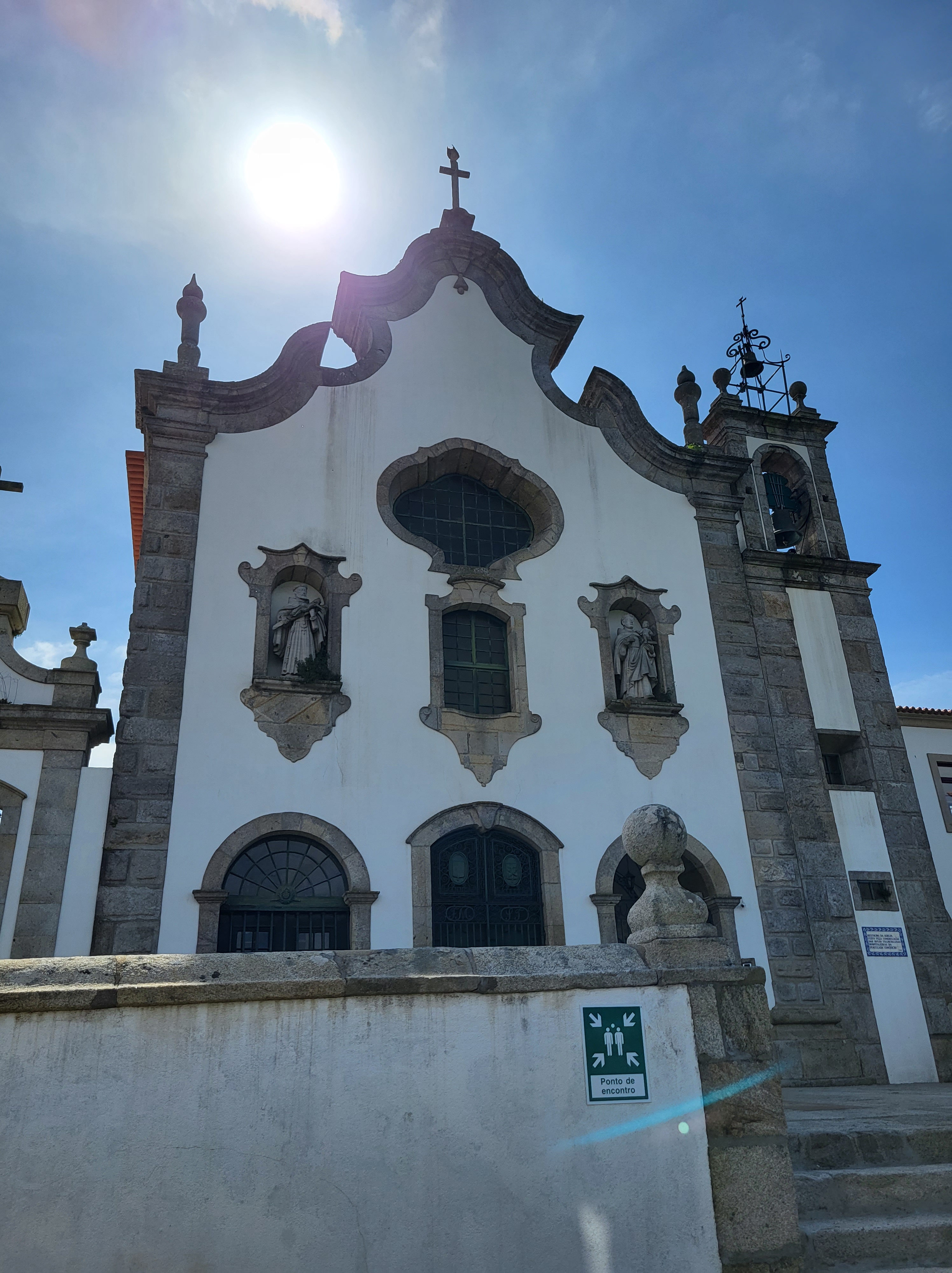
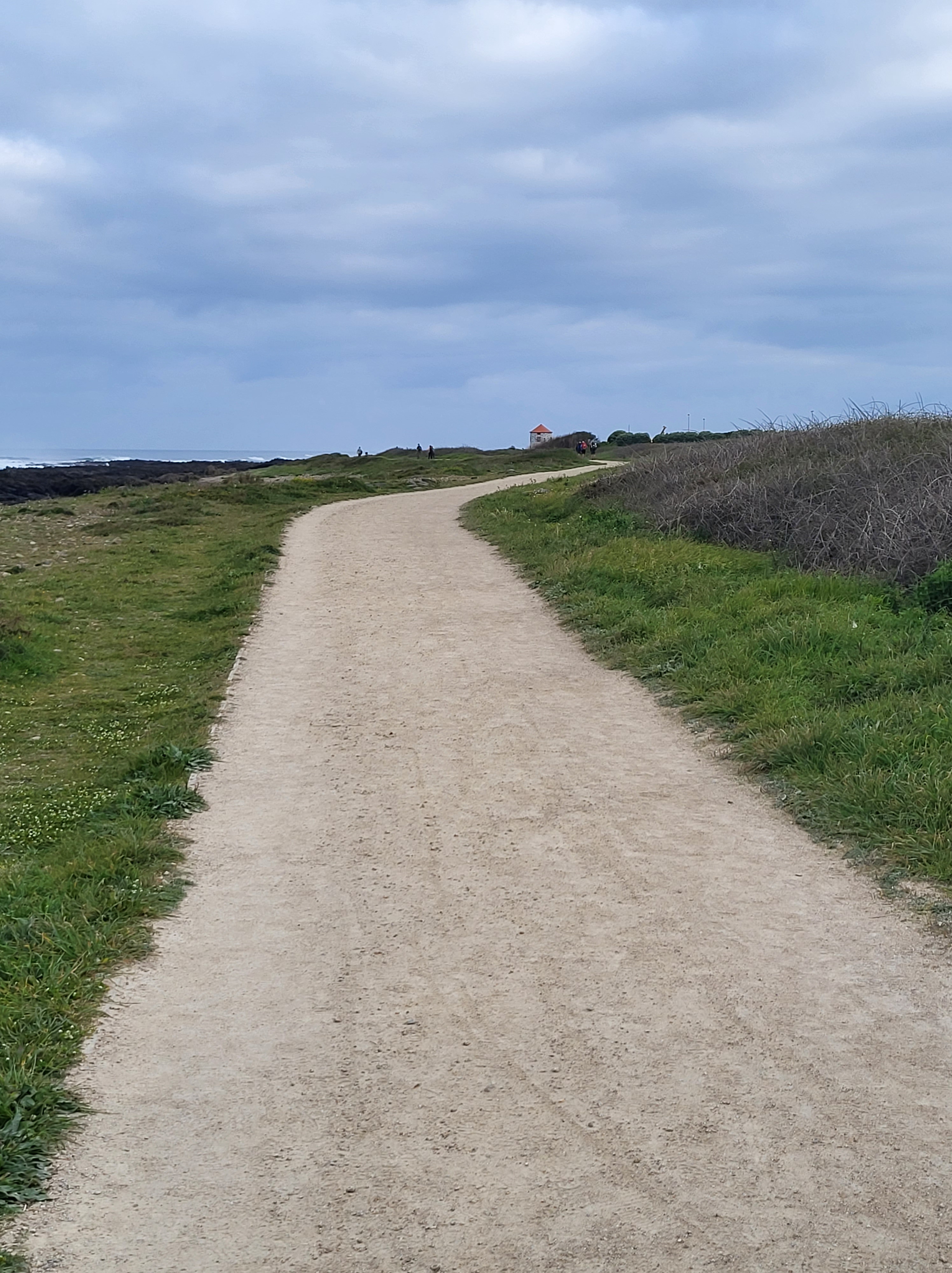
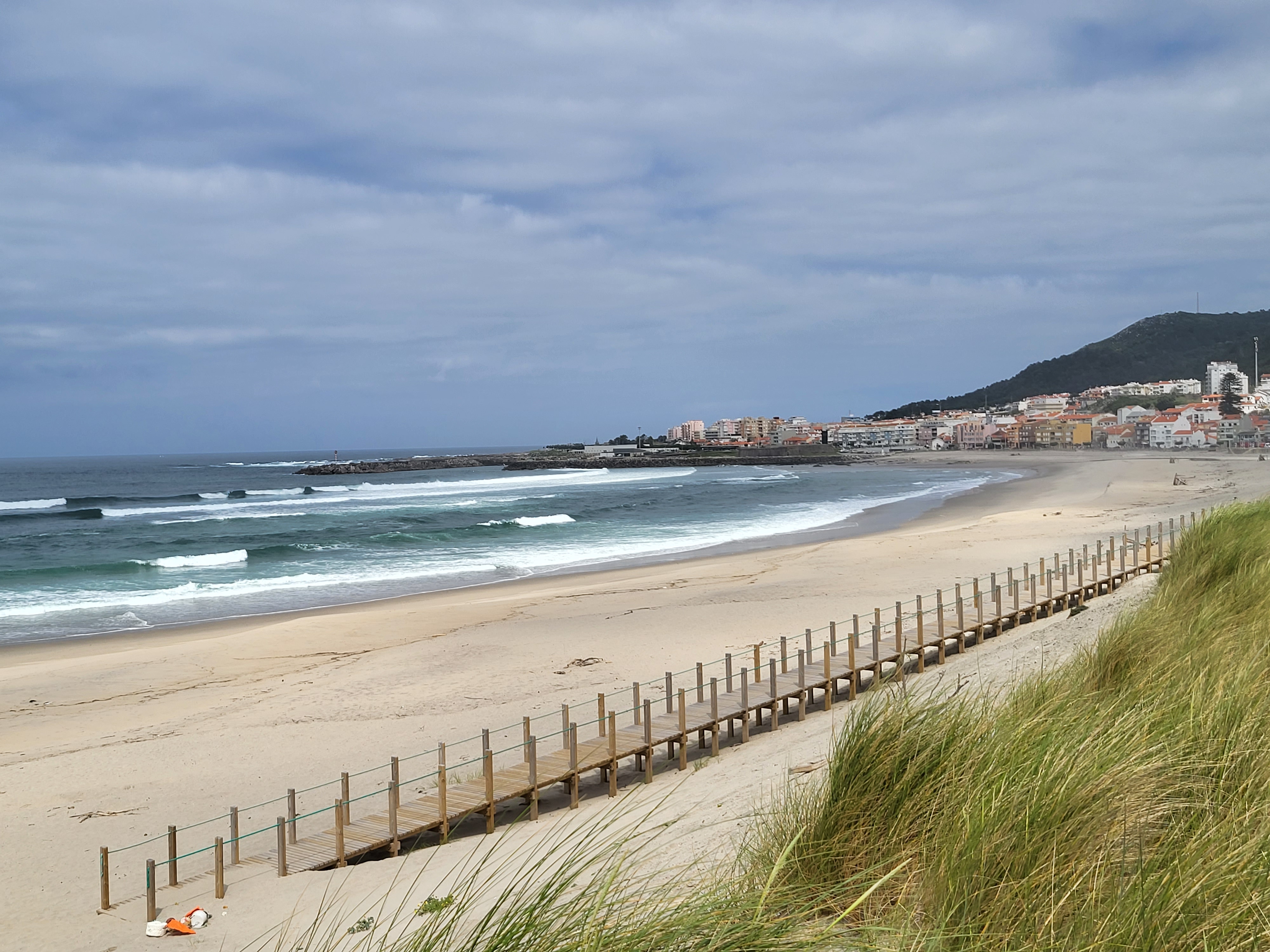
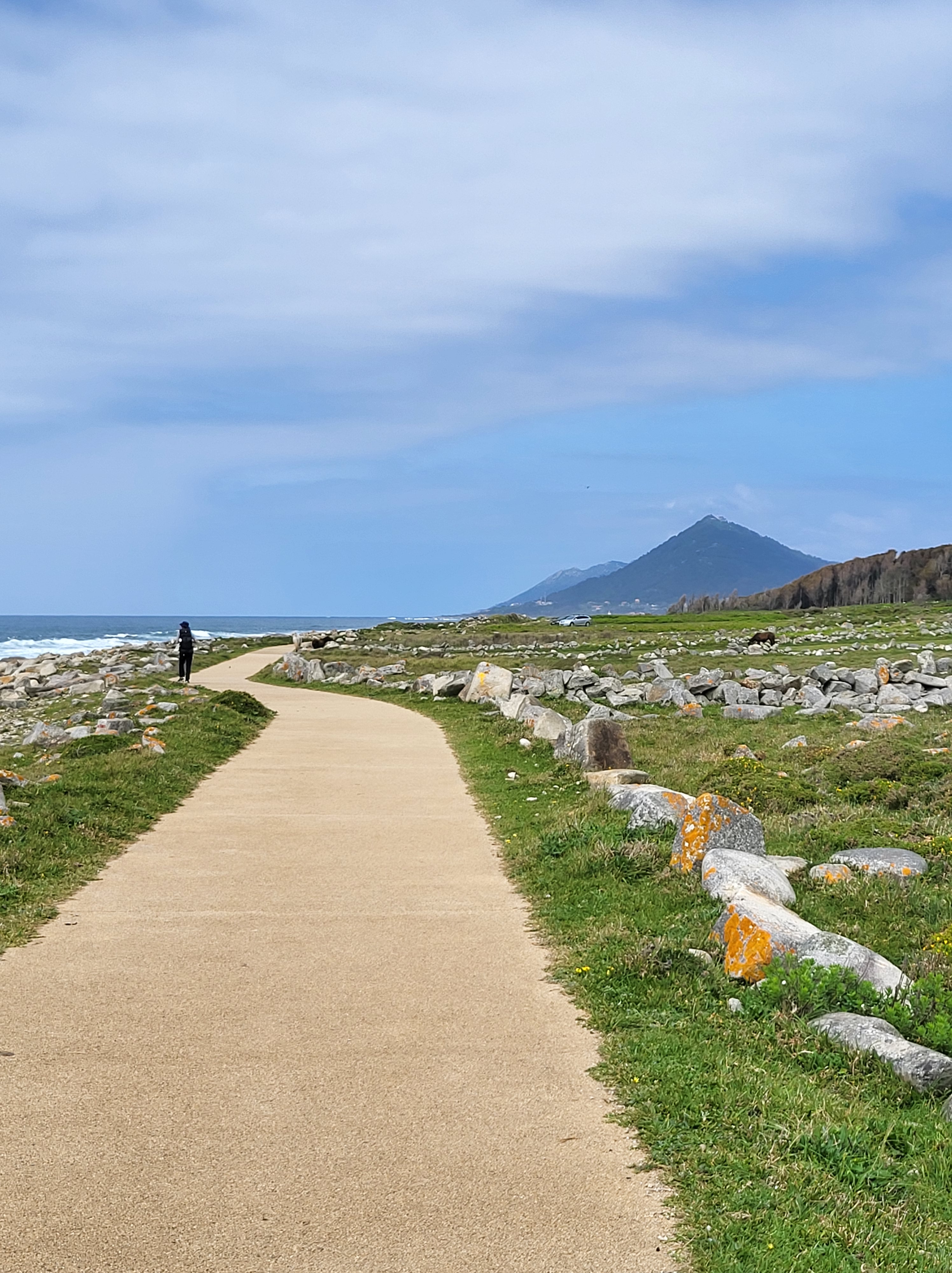
From the pasteleria, I walked about half a kilometer through the city. I passed a cool church, some interesting statues, and had great views of the castle that was perched on the hill above. The city route ended at the Atlantic Ocean, I turned north and began the walk up the coastline. Nearly all of the paths today would hug the coast. No complaints from me – sea level walking and beautiful beaches.
The Final Day of Portuguese Hospitality
As I walked along, I realized that this would be my last day in Portugal. I would overnight in Caminha, and then cross the border into Spain first thing in the morning.
I have enjoyed my time here. The countryside is beautiful, full of the life and color. The cities – Lisbon, Coimbra, and Porto are classic. And the people are so kind and hospitable (except the Pilgrim Frogger competitors). The remaining Portuguese I would encounter today were the same as all the others.
Three-fourths of the way through today’s walk, I stopped in Vila Praia de Âncora for lunch, a beer, and to charge my phone. This is a beautiful beach town, and I found a restaurant right on the water. It was about perfect. It had been over 36 hours since my last hamburger, so that’s what I ordered for lunch. Yes, it was as good as every other burger in Portugal. I think the country ended up being 8 for 8 in hamburger home runs.
After lunch, I still had a couple of hours of walking until I reached Caminha, my stopping point for the day. Most of this walk is along the coastline but turns inland and goes up the river that separated Portugal and Spain.
I strode into town around 2:00 pm and followed the terrible Google directions to the Arca Nova Hostel, my home for the night. The Google Map wiggled and routed me along the most obscure and steepest streets of Caminha. I learned later there are better ways to get to the Arca Nova. Nevertheless, I arrived.
This hostel was another one of those places that offers over-the-top hospitality! As mentioned, this seems to be the standard along the Camino Portugues. Arca Nova takes it up a notch by providing an Epsom Salt Foot Bath right in the lobby, along with instructions on how to alternately treat tired feet with hot and cold water. Everything about this place is for the comfort of the pilgrim.
After settling in and machine-washing my laundry, I sauntered down to the town’s plaza in search of a light dinner. There were several options available, and I chose the Restaurante o Chafariz. When I went inside, it was apparent this was a family-run restaurant. They were all gathered at a table eating together, no other customers in sight. When I entered, they all sprang into action. I explained that I wanted a light dinner, with red wine, and I wanted to eat on the plaza. The young lady told me to choose my table outside and they would take care of me.
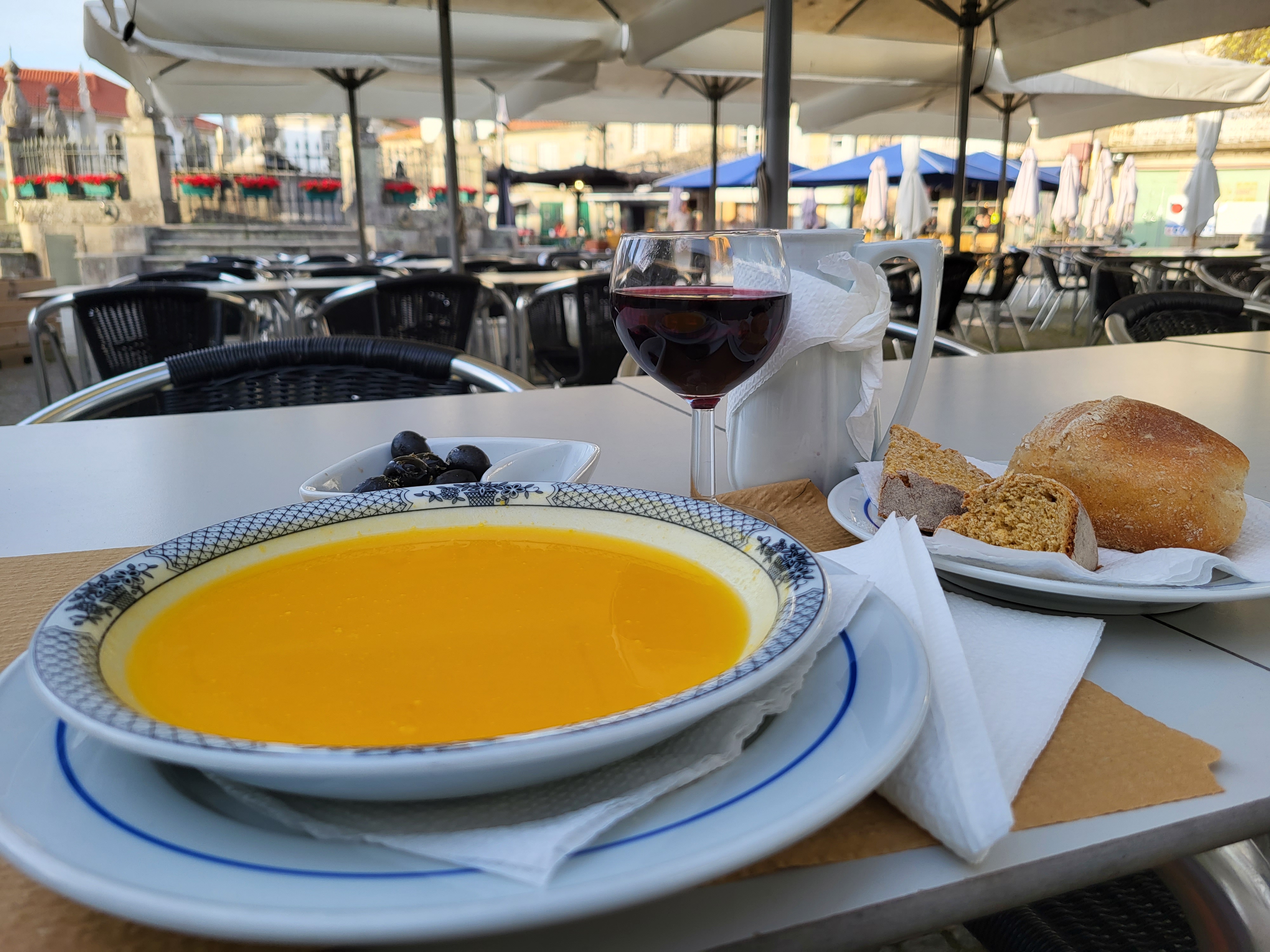
Not long after I was seated, one of the sons brought a decanter of wine and a bowl of olives. Thirty minutes later, the young lady brought out warm bread and a hot bowl of carrot soup. It was all fantastic! And the total was less than 6€, and still the family treated me as if I was the most important high roller in town. This kind of hospitality was normal and now expected here.
Back at the albergue, I ended the evening with a great conversation with a German retiree that lived in Cádiz, Spain and her hiking companion. He was a retired schoolteacher from the Seattle area. When they left for dinner, I went to speak with the albergue host about the ferry ride to Spain in the morning.
Our conversation was in Portu-Spanglish. The gist of the communication – I needed to get on the ferry in the morning and needed to know the schedule. He told me not to worry, that he would take care of it. He would get me a ride and get me across for 6€. All I had to do was be in the hostel lobby by 8:00 am (after the provided breakfast).
I made a lot of assumptions about this conversation, but confirmed:
“On the ferry?”
He curiously answered:
“You will be in Spain much earlier.”
I left it at that, trusting this good Portugues man, and the overall good will of the country.
Guides
Colors

Paths
 Pilgrims and Prophets