Belizean Prophetess
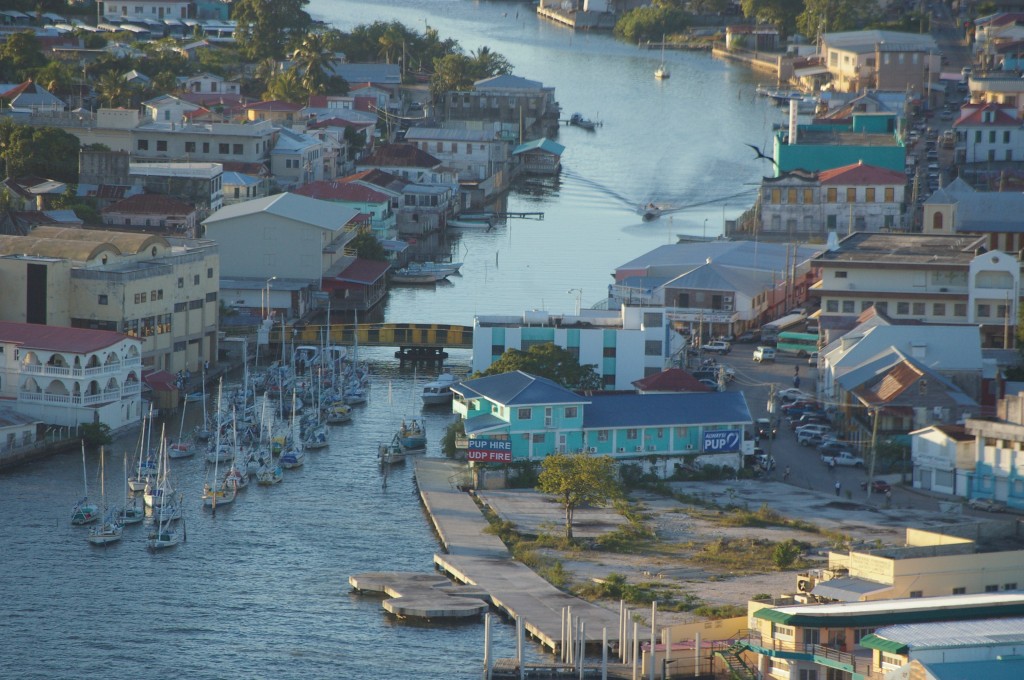
I stood in the open-air Flea Market off Cork Street in Belize City when I heard her…
“Greed! Greed is the problem!” shouted the woman in Creole flavored English.
“Greed is everywhere! In Belize City, in the US, it’s all greed, that’s the problem! Do ya agree with me mon?”
And she stared directly into my eyes.
In the awkward seconds that followed I thought, yes, it is a problem. I understand in theory and sometimes in practice. Apparently, it was not a rhetorical question, her eyes were still locked on me, so I muttered,
“Uhhhh…yeah.”
Once I agreed with her, she started to preach.
“The good Lord made tha world with enough for everyone! Why do me and ma children have ta struggle ta get by? Greed is the problem!”
She went on to tell me of the struggles of her life. Food anxiety. The hopelessness of poverty. The lack of opportunity. Access to education for all her children – the schools of Belize are private, but the tuition is paid by the government. The majority of private schools are run by Christian churches – Catholic, Episcopal, and Methodist seem to be the most common.
So, no problem mon, right?
Wrong…the families are responsible for buying books, shoes, and school uniforms. These costs multiplied over a few kids make education unaffordable, so the families do the best they can, which is incomplete.
She was forced to choose – some went to school, some didn’t…
The Great Economy
Another great prophet, Wendell Berry in his book, “What Matters? Economics for a Renewed Commonwealth”, wrote about Two Economies.
One, the Industrial Economy, is generally exploitative, tyrannical, destructive, and false.
The other economy is comprehensive, all elements or aspects of a country or region are considered in the production and consumption of goods and services. This would include ALL people AND resources of a particular country or region.
“The earth is the LORD’s and everything in it, the world, and all who live in it.” – Psalm 24.1
He calls this the Great Economy but suggests it could be called the Kingdom of God.
This comprehensive economy does not leave anything out – not the sparrow, not the lily of the field, not the blind, not the leper, not the poor, not the widow, not the orphan, not the alien, etc. This is because everything is joined to the Kingdom and everything else is in it.
Everything includes the poor children of Belize city. The Industrial Economy forgot about the people of Belize when it had stripped the country of all its mahogany…
A Benediction
In the 12th chapter of the Gospel of Luke, there is a story of a rich man. This man had done well for himself, so he decided to build bigger barns to store all of the stuff he had accumulated.
The ancient Christian church, based on this story and lots of supporting Scripture, taught:
- the only barns we need we already have; those barns – the stomachs of the poor
- the bread we store in our cupboard belongs to the hungry
- the extra coat(s) in our closet belongs to the one that has none
- the rotting extra shoes in our closet belongs to the one without shoes
- the money that we hoard belongs to the poor
The economy is a spiritual issue, made sacred or profane.
Based on this story and these teachings, I would love for US churches, in our abundance, to provide books, shoes, and uniforms for the children that OUR CHURCHES are trying to educate in Belize.
 Pilgrims and Prophets
One thought on “Belizean Prophets and the Great Economy”